


Saving Baltimore’s Babies, One Community at a Time
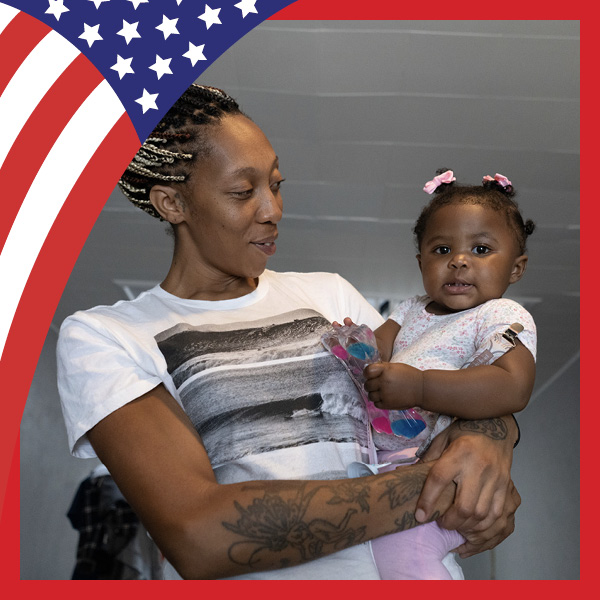
The story of American progress is often told through scientific breakthroughs, medical discoveries, and technological innovation. But some of the most meaningful advances happen not in laboratories or hospitals, but in neighborhoods.
As the United States celebrates its 250th birthday in 2026, the University of Maryland, Baltimore’s (UMB) work to reduce infant mortality in some of Baltimore’s most vulnerable communities offers a powerful example of how partnerships, trust, and community-led solutions can save lives and set the path for a national model.
For more than a decade, the University of Maryland School of Social Work (UMSSW) has been at the center of an innovative effort to address one of the city’s most persistent public health challenges: ensuring that more babies survive and thrive during their first year of life.
The effort is called B’more for Healthy Babies, and its success demonstrates that improving health outcomes requires more than medical care alone.
It requires listening to communities.
A Different Approach to a Persistent Challenge
Infant mortality has long been one of the most important indicators of a community’s health and well-being. And for decades, Baltimore struggled with some of the highest infant mortality rates in the nation, with significant disparities between black and white infants.
The challenge was especially acute in neighborhoods facing persistent poverty, housing instability, limited access to health care, and other social determinants of health. Rather than focusing solely on clinical interventions, UMSSW and its partners took a broader view.
Through the school’s Promise Heights initiative, a place-based strategy serving the Upton and Druid Heights communities of West Baltimore, faculty, staff, students, residents, and community organizations came together to address the factors influencing maternal and infant health long before a baby is born.
The result was a model built on relationships, trust, and community leadership.
B’more for Healthy Babies Upton/Druid Heights is a collaboration involving UMSSW and its Center for Restorative Change, the University of Maryland School of Medicine, the Baltimore City Health Department, Family League of Baltimore, community organizations, faith leaders, schools, health providers, and neighborhood residents themselves.
What makes the program unique is that community members are not simply recipients of services — they also are involved in the work.
Certified community health workers, known as Resource Parents, help connect families to prenatal care, parenting education, breastfeeding support, housing resources, mental health services, and other supports. The program also includes father engagement efforts, peer leadership opportunities, and neighborhood-based educational programs designed to strengthen families and improve outcomes for children.
The approach recognizes that healthy babies are influenced by far more than what happens during a medical appointment. Health is shaped by where people live, learn, work, worship, and raise their families.
Taking Public Health to the Community
One of the program’s most innovative aspects is its ability to translate public health information into trusted community conversations. Joining with neighborhood organizations, churches, schools, and even local barbershops, B’more for Healthy Babies has brought important messages about safe sleep, breastfeeding, smoking cessation, reproductive health, and infant care directly into the places where families gather.
The goal is not simply to deliver information but also to build community knowledge and empowerment.
Parents learn how to advocate for themselves during pregnancy and childbirth. Families gain access to resources that address immediate needs while also strengthening long-term stability. Community leaders become trusted messengers who help share lifesaving information throughout the neighborhood.
The model reflects a core principle of social work: Sustainable change happens when communities help lead it.
The impact has been extraordinary.
Under the leadership of director Stacey Stephens, MSW, LCSW-C, and through strong partnerships with residents and community organizations, the initiative helped achieve a dramatic reduction in infant mortality in Upton and Druid Heights. The community experienced a 75 percent reduction in infant mortality over the course of a decade, dramatically reducing the disparity between black and white infant mortality rates in the neighborhood.
The program’s success has drawn national attention as a model for addressing health inequities through community-based approaches. In Upton/Druid Heights, there were no fetal deaths recorded between 2014 and 2020, a remarkable achievement made possible through years of coordinated community action and support.
The work also contributes to broader citywide progress. Since the launch of B’more for Healthy Babies, Baltimore has experienced significant reductions in infant mortality and narrowing racial disparities in infant deaths.
A Legacy of Service
For more than 200 years, UMB has worked to improve health and well-being through education, research, clinical care, and public service. UMSSW’s work in infant mortality prevention demonstrates that some of the most powerful solutions emerge when universities partner directly with communities to address complex social challenges.
It is a reminder that improving health is not only about medicine. It also is about housing, education, relationships, opportunity, and trust. And the story of B’more for Healthy Babies reflects a uniquely American ideal: Communities working together can overcome even the most difficult challenges.
In West Baltimore, that ideal is measured not in statistics alone, but also in birthdays celebrated, families strengthened, and children given the opportunity to grow up healthy and thrive.
For UMB, those outcomes represent one of the most important forms of innovation — not simply discovering new ways to treat disease, but also building partnerships that help prevent tragedy before it begins.
And for hundreds of Baltimore families, that work has made all the difference.